Sunday, August 11, 2019
Another fallow week
A bit of a hectic week this time, so I’ve got nothing for you, really. Try again next week.
Sunday, August 4, 2019
Mystical Memoriam I
"Behind the Purple Stars"
[This is one post in a series about my music mixes. The series list has links to all posts in the series and also definitions of many of the terms I use. You may wish to read the introduction for more background.
Like all my series, it is not necessarily contiguou
Wikipedia tells us that a celesta is a “struck idiophone operated by a keyboard,” and that “the keys connect to hammers that strike a graduated set of metal (usually steel) plates or bars.” In other words: piano on the outside, glockenspiel on the inside.1 It has a tinny sound that’s vaguely reminiscent of a child’s music box, but much richer and more complex. This makes it ideal for imparting a magical, childlike quality to music, which you can hear in its most famous use prior to the 20th century, “The Dance of the Sugar Plum Fairy” from The Nutcracker, or when it subsitutes for the keyboard glockenspiel in The Magic Flute or the glass harmonica in The Carnival of Animals, or in pop songs such as “Rhythm of the Rain” or “Novocaine for the Soul”, and of course in soundtracks. For instance, that’s a celesta you hear in the opening bars of “Pure Imagination” from Willy Wonka & the Chocolate Factory, and it’s even more prominent in the opening of “Won’t You Be My Neighbor?” from the classic Mr. Rogers’ Neighborhood. But surely the most recognizable celesta strains in all of musicdom are found in John Williams’ recurring theme from the Harry Potter movies: “Hedwig’s Theme.” Just the first few notes are enough to transport the listener to a world of magic and child-like wonder.2
Of course I was familiar with this recurring theme through the movies, and I also felt it was pretty perfect. Could there be other musical takes on the combination of magic and nostalgia that one gets from a re-viewing of the world through the eyes of a child? Sure, but would they ever be as good? Nah, probably not.
But, as I was perusing Jamendo one day several years bac
So now we do.
The obvious choices here are our mix starter, the aforementioned track by (probably would-be-soundtrack-composer) artist Greendjohn, my Bruno Coulais pick “Exploration,” and “Prologue” from Harry Potter & the Sorcerer’s Stone. I actually pored over all the instances of “Hedwig’s Theme,” both solo and buried in other tracks, and I think it just doesn’t get any better than this one, which is the original presentation. To me, that’s the perfect opener, and the other two follow in quick succession, and then I only had about 70 more minutes to fill. Where in the world was I going to find more candidates that would fit this theme?
Well, first off, back to Jamendo to scour the other “pseudo-soundtracks” for possibilities. That led me to zero-project, a somewhat mysterious artist: I would guess they’re in Greece, from the TLD of their website’s domain, but other than that, I can’t tell you much. But they do some great cinematic music, and there are two tracks here: “Princess of My Heart,” an almost romantic piece, and “Forest of the Unicorns,” from what could be a pretty decent fantasy gaming soundtrack, Fairytale. Also on Jamendo I discovered Epic Soul Factory,3, an orchestral group from Spain that does some pretty great cinematic music as well. Their simply-titled “Love” is probably more on the nostalgic side than the magical one, but it works well enough here, I think.
Real soundtracks work well, too. There’s a short bridge here from Jon Brion’s score for Eternal Sunshine of the Spotless Mind4, and the “Love Theme” from Until the End of the World by Graeme Revell, which is a flute-filled little bridge between the first zero-project track and the Mannheim Steamroller. “La Clé de la victoire” is also a fairly short track, this time from The City of Lost Children by Angelo Badalementi, which also gives us a longer piece, “Le prince de l’opium.”5 These two abandon the flute for some lower-register woodwinds, and the latter even layers on some harp and strings, but they still maintain the magical feel that this mix is all about. Finally, “Memory,” by the Seatbelts off the Cowboy Bebop soundtrack, was too on-the-nose not to include (and plus I’m pretty sure it has some of that sweet celesta in it).
One very early track I picked for this volume is its longest, “Minitoka,” by DJ Food, originally a loose collaboration of various electronic artists and producers but now mostly a one-man operation. Like many artists of this nature, I find a lot of the music to be repetitive and only vaguely interesting, but every once in a while you find a hidden gem. I originally heard “Minitoka” on the “Zen” music channel,6 and I was immediately struck by its alternating harp-and-bell-like glissandoes with pan flute trills. No doubt both are electronically enhance
I figured other, similar downtempo (a.k.a. “chill”) electronica might work as well, so I went searching through some of those albums too. This led me to “Zamami,” by Plaid,7 which uses some synthy subvocal undertones for the memoriam and what are probably tubular bells for the mystical. I also found “Behind the Bamboo Curtain,” by the Karminsky Experience, which really leans more out of chill and into trip-hop. I can’t remember how I discovered these guys, but they’re quite good; we saw them previously on Apparently World. This track floats in on a shimmering curtain of chimes and then adds a sitar for a more subcontinental flavor of magical.
Of course, ambient is fairly adjacent to downtempo, so I went looking there as well. Jeff Greinke is an artist I normally reserve for my Shadowfall Equinox mix, but, as I’ve mentioned, he’s an eclectic musician whose every album is a little bit different. His Winter Light is pretty much exactly what it says on the tin: mostly tunes that are brittle and a bit cold. Overall more suited to a whole different mix.8 But “Orographic” is a little different: for some reason, it makes me envision a frozen lake, where the water has receded and then refrozen so that there’s an air pocket between the two layers of ice, and the sunlight filters through the surface layer and glitters off the stray ice columns, creating a sparkling alien landscape ... or maybe it’s just me.
But probably the richest musical vein to mine, outside of cinematic, is new age. As I’ve said, there’s not a lot of new age that I really enjoy, but Anugama is right up there. “Purple Dawn” is another track that doesn’t play coy in its title: it evokes day breaking over a quiet forest glade, which is certainly its own kind of magic. David Arkenstone I’m a little less bullish on, but he does have a song every now and again that speaks to me, and “Stepping Stars” has that exact tinkling, mystical quality that I’m looking for here. (Also, note that, due to pretty much every song here being instrumental, I employed my tactic from Classical Plasma and just glued words from different titles together, so “Puple Dawn” plus “Stepping Stars” gave me most of it, and the Karminsky tune provided the preposition.) Finally from the new age genre, our closer here is from Peruvian-descended Australis.9 “Little Clockmaker” is indeed reminiscent of a timepiece, but more like the scenes you may have seen in movies or videogames where some small character is confronted by the grandeur of a clockwork mechanism that is giant to them, and they must navigate the turning gears and spinning oscillators in order to reach some goal. It’s the perfect closer for this volume.
Mystical Memoriam I
[ Behind the Purple Stars ]
[ Behind the Purple Stars ]
“Prologue” by John Williams, off Harry Potter and the Sorcerer's Stone [Soundtrack]
“Exploration” by Bruno Coulais, off Coraline [Soundtrack]
“3 Minutes Later” by Greendjohn, off Loophole
“Minitoka” by DJ Food, off Kaleidoscope
“Behind the Bamboo Curtain” by the Karminsky Experience Inc., off The Power of Suggestion
“Postcard” by Jon Brion, off Eternal Sunshine of the Spotless Mind [Soundtrack]
“Paradise Found” by Martin Denny, off The Exotic Sounds of Tiki Tribe [Compilation]
“Orographic” by Jeff Greinke, off Winter Light
“Princess of My Heart” by zero-project, off Autumn Prelude
“Love Theme” by Graeme Revell, off Until the End of the World [Soundtrack]
“Full Moon” by Mannheim Steamroller, off Halloween: Monster Mix
“La Clé de la victoire” by Angelo Badalamenti, off The City of Lost Children [Soundtrack]
“White Woodlands” by Nox Arcana, off Winter's Majesty
“Memory” by the Seatbelts, off Cowboy Bebop [Soundtrack]
“Love” by Epic Soul Factory, off Xpansion Edition
“Stepping Stars” by David Arkenstone, off Valley in the Clouds
“Zamami” by Plaid, off Double Figure
“Purple Dawn” by Anugama, off The Lightness of Being [Compilation]
“Le prince de l'opium” by Angelo Badalamenti, off The City of Lost Children [Soundtrack]
“Forest of the Unicorns” by zero-project, off Fairytale
“Little Clockmaker” by Australis, off The Gates of Reality
“Exploration” by Bruno Coulais, off Coraline [Soundtrack]
“3 Minutes Later” by Greendjohn, off Loophole
“Minitoka” by DJ Food, off Kaleidoscope
“Behind the Bamboo Curtain” by the Karminsky Experience Inc., off The Power of Suggestion
“Postcard” by Jon Brion, off Eternal Sunshine of the Spotless Mind [Soundtrack]
“Paradise Found” by Martin Denny, off The Exotic Sounds of Tiki Tribe [Compilation]
“Orographic” by Jeff Greinke, off Winter Light
“Princess of My Heart” by zero-project, off Autumn Prelude
“Love Theme” by Graeme Revell, off Until the End of the World [Soundtrack]
“Full Moon” by Mannheim Steamroller, off Halloween: Monster Mix
“La Clé de la victoire” by Angelo Badalamenti, off The City of Lost Children [Soundtrack]
“White Woodlands” by Nox Arcana, off Winter's Majesty
“Memory” by the Seatbelts, off Cowboy Bebop [Soundtrack]
“Love” by Epic Soul Factory, off Xpansion Edition
“Stepping Stars” by David Arkenstone, off Valley in the Clouds
“Zamami” by Plaid, off Double Figure
“Purple Dawn” by Anugama, off The Lightness of Being [Compilation]
“Le prince de l'opium” by Angelo Badalamenti, off The City of Lost Children [Soundtrack]
“Forest of the Unicorns” by zero-project, off Fairytale
“Little Clockmaker” by Australis, off The Gates of Reality
Total: 21 tracks, 71:50
For the rest, I had to get more creative. I figured that gaming music would be a good source, but most of it turned out be way too dramatic for this mix. There were mysterious creepy tracks, and sweeping tracks that evoked a wizards’ duel, but nothing that seemed to fit this much quieter theme. The only thing I could really settle on was “White Woodlands” (which I suspect also has a bit of celesta in it) by gaming music mainstays Nox Arcana. Normally NA focuses on the darker side of fantasy, but Winter’s Majesty, while still dark in some places, has a bit more light to it. “White Woodlands” is probably the lightest track on that album, although I suspect it may be the darkest one here. But the contrast of the sparkling (probably) celsta with the deeper (probably) tubular bells works well.
Similarly Mannheim Steamroller’s Halloween: Monster Mix was an unlikely place to find a quiet, mystical tune, but “Full Moon” really fits that bill. The background crickets counterpoint the slow synth notes that seem to drop like water falling onto a quiet nighttime scene. And, last but not least (although possibly most unlikely), we have “Paradise Found” by Martin Denny, the father of exotica. While most exotica evokes (quite deliberately) the sound of the Pacific Islands (and Hawaii in particular), there are deeper jungle tracks, and the occasional quiet track such as this one. I can’t say for sure, but I strongly suspect that’s a vibraphone that’s giving the this great track its mystical, nostalgic feel.
Next time, we’ll go back to some smooth loungin’ around.
__________
1 Some people would say “xylophone,” but the bars on a xylophone are made of wood, not metal. Yes, all your toy “xylophones” are actually glockenspiels.
2 For a pretty good breakdown of what makes this music so perfect for a story about wizards, professor of music theory Mark Richards has a fascinating discussion.
3 Although they’ve moved to Bandcamp nowadays.
4 We’ve seen that soundtrack in this series before, on Paradoxically Sized World II.
5 We’ve also seen this soundtrack before, on Darkling Embrace and Phantasma Chorale.
6 I talked about my cable/satellite provider’s “Zen” channel back on Paradoxically Sized World I. Although it’s also fair to note that a) that provider doesn’t have that channel any more, and b) I don’t have that provider any more.
7 Another artist I discovered via LittleBigPlanet. We’ve seen them, naturally enough, on Paradoxically Sized World II.
8 Which we shall (probably) come to in the fullness of time.
9 Whom you may remember from their turn on Shadowfall Equinox IV.
Sunday, July 28, 2019
Quiet week, just a few demons to deal with ...
 This week The Mother took the sprite off camping for the latter part of the week, while I stayed home with the other two. I took a couple days off from work and mainly just hung around the house, catching up on a few things, enjoying the pool for a change, having a little peach bellini during the day and just generally relaxing. One of the things that we decided to do with our newfound free time was to build out a giant-ass Heroscape map—


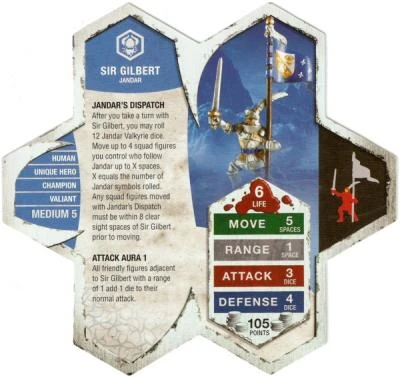
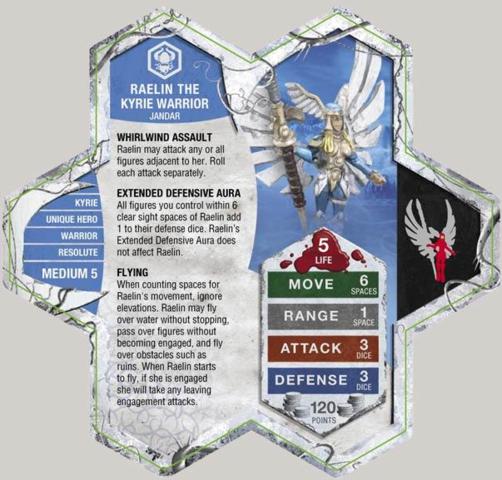

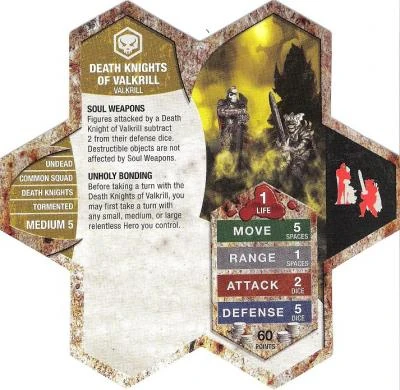

It was a pretty epic battle, and it still ain’t over yet, but I think the forces of good, though having incurred serious losses, will eventually carry the day. That giant-ass demon guy is down to one life left.
Anyways, that’s all for now. More exciting stuff next week. Probably.
Sunday, July 21, 2019
D&D and Me: Part 3 (Playing the Roles)
[This is the third post in a new series. You may want to begin at the beginning. Like all my series, it is not necessarily contiguou
[When we left off last time, I had sort of kind of played D&D, but not really knowing what the hell I was doing. Still, many characteristics of those early games still hold true today (or perhaps are true again): I was the GM, I homebrewed a lot of stuff, I made sure my PC didn’t die, and I played a GMPC.]
To understand my D&D experience in college, we first have to understand a bit about my overall college experience. I went to college right out of high school, as many folks do nowadays, but back then I was the first person in my family to do so.1 I went somewhat aimlessly for two years: I did well in a bunch of classes, did horribly in others, and dropped more than a few. After two years, I had neither a major nor enough credits to technically qualify as a junior. I decided that college was too hard and dropped out to go work in the Real World™. Well, after 3 years of that, I decided that working in the Real World was even harder (most of my readers no doubt just said “duh” under their breaths) so I decided to go back to get my degree. Long story short, I ended up spending my last 3 years of college about 3 years older than everyone else. Being in most cases the only person around old enough to buy beer certainly has its uses in terms of popularity, and I found myself with a much larger friend pool in this second college stint.
I was also attending college with one of my best friends from late high school and the period just afterwards. He was 4 years younger than I, not even a freshman when I was a senior, but his mom had been my Spanish teacher, so I’d known him forever. And he was always much more gregarious than I was, so I inherited this large group of people who were predisposed to think kindly of me because we had this great friend in common. And, at some point, my friend says to me, “hey, you used to play that Dungeons & Dragons thing, right?” D&D was never his thing, but some of those other folks were into it, so maybe I could hook up with them? I was a bit hesitant, because remember: I still didn’t really have a clue what I was doing when it came to playing the game. But at least I had played before, and that counted for something, and soon I was inducted into my first real gaming group.
I first joined that group in about 1990, and played in it very regularly until I moved to Maryland in 2004. (And my very last game with the group was on the occasion of my going away party when I moved to California in 2007.) Of course, people came and went continuously throughout that 14 years, and, much like the paradox of Theseus’ ship, it could be argued that it wasn’t really the same group at all by the time we got to the end of that period, with only 2 of us original members remaining.2 By the time it was over, we had not only played every version of D&D up to that point (1e, 2e, 2e + Skills and Powers, 3e, and 3.5e), but dozens of other games besides: Vampire, Call of Cthulhu, Star Wars (two different versions), Traveller, GURPS, Wheel of Time, Mage, Trinity, and In Nomine. We further rolled up characters for but never played (or only played an introductory session of) Shadowrun, Hero, and BESM. Games which I bought but never played included Palladium, 7th Sea, Earthdawn, EverQuest, and Jorune. I don’t reel off this long list to impress you, but rather to impress on you what a huge part of my life this was. It didn’t consume all my spare time, of cours
At first, it was all one insane, connected campaign. If we got bored with one setting or plotline, we just planehopped somewhere else: from Ravenloft to Athas to Sigil, from White Plume Mountain to Castle Amber to a strange land laid out like a chessboard. Some of us would keep the same characters, some of us would roll up new ones, and I have a lot of difficulty remembering which characters adventured with which and where one adventure ended and the next began. I remember we decided to play an “evil campaign” once and, instead of rolling up new characters, we just turned all our old characters evil. It had rather dire consequences for the ranger and the cleric, but I was a druid at the time (and therefore true neutral, whether I liked it or not), so I just sort of shrugged and said “whatever.”3 Occasionally our characters would die, but more often we’d just get bored with them and “retire” them ... you know, just in case we ever needed them again.4 Later, we adopted a rotation system, where we would take turns being the GM so that each person had more time to prepare for their campaign, and we would play a different gam
My history as a player was both weird and predictable. Just like with comic book characters, I liked the oddballs. Fighters were boring: all they could really do (at least pre-third-edition) was swing their swords and repeat. Wizards were both diametrically opposed and exactly the same: they had this huge plethora of spells (which came with a massive amount of bookkeeping work), but, at the end of the day, all they could really do was cast their spells and repeat. I was drawn to the classes that nobody else wanted to play because they were strange or “underpowered,” classes that couldn’t do any one thing better than anyone else but could do a little bit of everything. I favored druids and bards,5 once a nature cleric (who was almost a druid, really), and later on a psionicist and then a monk (who also had a few psionic levels). I also experimented with hybrid characters, using the Skills & Powers system, trying to create the perfect blend of thief and wizard. The two times I was reluctantly talked into playing a straight fighter, I chose a half-ogre the first time and an alaghi (pseudo-yeti) the second time. For yet another evil campaign, I played a wannabe necromancer who was so low-level that he could only reanimate zombie chickens.6 Basically, any excuse to do something different.
Again, it’s an interesting exercise to analyze my behavior in hindsight. Could I say I was embracing diversity, even back so far as when I was trying to “collect” all the monsters and let them all have an equal place in my fantasy world? Well, somewhat ... but I don’t want to hyperidealize my younger self. Absolutely I was always happy to go around slaughtering orcs and goblins just because that’s what you were “supposed” to do in the game, and I will admit it never really occurred to me to question that until I started hearing about other people doing it first. So please don’t imagine that I’m claiming more social consciousness than I deserve. But I do want to give credit to D&D for a little of that type of thing. For instance, the first time I ever imagined myself as a woman was because I wanted to play a swanmay, and there are no male swanmays. At that time, I wasn’t yet comfortable enough in my identity and sexuality that this was a no-brainer for me: I struggled with that decision for quite a while before I took the plunge. And I no doubt didn’t do a very good job portraying a woma
Next time: I’ll take a little closer look at what playing all these different roles meant to me.
__________
1 Except for possibly my grandfather on my mother’s side, who was the only other person before me to even attend. But I think even then there was some delay between high school graduation and college matriculation.
2 Actually, technically speaking, I wasn’t an original member myself, so there was really only one.
3 What I actually said had more to do with maintaining balance in the universe and how we’d probably done enough good in the world that we could afford to do a little evil for a while without tipping the scales too much. But it certainly meant “whatever.”
4 My absolute favorite was my friend Tim’s dwarf (fighter? cleric?), who took his helm of underwater breathing (or somesuch; I’m probably misremembering the exact name of the item) and retired to the ocean floor to become a kelp farmer.
5 Prior to second edtion, bards were notoriously impossible to play; my first bard character was drawn from the Dragon magazine article “Singing a new tune: A different bard, not quite so hard”.
6 I mean, theoretically, he would have been able to raise proper zombies at some point. But we didn’t stick with that campaign very long.
7 That would be in the Trinity game. For some reason, I was very attracted to the biokinetics in the game, who could change their body shapes and facial features pretty much at will, and I decided I was actually 3 or 4 different people living in one body, with different races and genders.
Sunday, July 14, 2019
SoCal 'Scapers Summer Gameday, 2019
This weekend we had a Heroscape gameday. Now, you probably remember that every year we do a Heroscape tournament, and this year will no doubt be no exception. But, at the end of the tourney, when we’re saying our farewells, we always promise that we’ll get together more than once a year, and maybe have just a casual gameday or two some other time during the year. We always say that ... but we (almost) never do. In fact, I would say that, in the decade or so that I’ve been going to SoCal Heroscape tournaments, we’ve managed to get together for a non-tourney event about twice. We just suck at getting organized.
But we finally managed it, yesterday at a local game store called Paper Hero’s Games. I and all three of my children, plus the middle one’s best friend, made the (moderately short) trek down and met up with 2 other regular tourney-goers, and we just happened to run into a new person who used to play but hadn’t in a long time. Brave soul that he was, he came up to us and asked if he could join, so we set him up with an army (I have a tendency to overdo when it comes to bringing ready-to-play armies, so I had 25 or so) and threw him into the mix. It was a great time, and I personally loved the venue more than other places we’ve tried, although I do admit that it was a tad crowded. Squeezing into your seat was tricky, and finding a place to put all our stuff was a logistical puzzle, and it certainly was loud. But the tables were free, the store management was friendly, they didn’t care that we brought outside food and drinks, didn’t give me crap when I finally ditched my shoes, and even asked if it was okay if they took back the table we had unceremoniously absconded with to put our overflow crap on—
The games were good too. We only got in about 3 games a piece, but it was a lot of fun, and I think the kids had a good time. We bought some stuff we really didn’t need (more to support the store than anything else), palled around with our fellow ‘Scapers, and one of our oldest Heroscape friends agreed to trade me a beautifully painted Gothlok for an unpainted one and few bucks. I wish I’d had a chance to try out even more of my weird army ideas, but my littlest one and I did get to play a bizarre army consisting of Harley Quinn (because that’s her favorite comic book character), Scarecrow and Creeper (who, with their insane personalities, bond with Harley), a passel of Nottingham Brigands for range, and good ol’ Marcu Esenwein to fill out the last 20 points. (This army, by the way, is not a particularly good one, but it was super-fun to play.) All in all, a great time, and I hope we get to do it more often.
Next week, something more substantial.
Sunday, July 7, 2019
R.I.P. ThinkGeek
As many of you may know, ThinkGeek disappeared from the web this week ... you can still put the address into your web browser, but you’ll end up on GameStop’s site instead. For the most part, it went quietly, without huge fanfare. Some of us former employees “celebrated” this event the way we’d always done when someone left the company: we drowned our sorrows in tacos. If you’ve seen a hashtag #TacosForTimm
I’ve mentioned before that I worked there, albeit briefly. In fact, I once did a blog post talking about my time doing the Ask Timmy column. Now, on the occasion of ThinkGeek’s (metaphorical) passing, someone suggested that I might be inclined to do one final Ask Timmy as a sort of eulogy. I considered this quite seriously. But the problem there is, Timmy is wise and clever and, most of all, he’s always nice. I’m not sure that my own feelings on what ThinkGeek meant can be that restrained. Truth be told, I have a little bit of bitterness about the whole thing, so let me get that out of my system first.
First, a bit of history.1 These 3 pals Willie, Jen, and Scott were running a small ISP, back in the days when there were such things as small ISPs, and they had an idea for a side business, selling geek T-shirts and electronic doodads from a separate website. They enlisted one of their ISP empmloyees, Jon, to pitch in, and the original thinkgeek.com was born. Shortly thereafter, it got slashdotted and the resulting traffic brought the servers down. That’s when they knew that they had hit upon not just an idea that people would pay for: they were hungry for it.
It was the very late 90s, and the dot-com bubble had yet to burst ... although, even when it did, ThinkGeek survived. Nowadays companies such as Nerdist and Geek & Sundry get a lot of (very deserved) credit for the proliferation of nerd culture ... but, don’t forget that ThinkGeek predated both by over a decade. In fact, while we can always quibble over the details, I would contend that ThinkGeek was the original purveyor of “geek chic,” and that it was a really big part of why geek is now big business. Which can only lead to the question: what happened?
So, here’s my theory, and you can take this with as much salt as you care to: I was sort of vaguely an insider, but only for a very brief period (about 3½ years out of ThinkGeek’s 20 year history). So I’m speaking about 82.5% as an outsider, really. Bear that in mind.
As part of one of my other series I’m working on, I’ve actually done a bit of historical research on TSR, the company that originally created D&D. It’s a complex story, but I think I can sum it up pretty succinctly: it was started by a geek (Gary Gygax), then it started making money, then the business people came in and forced him out, then they nearly went bankrupt. It was eventually bought, by the way, by Wizards of the Coast, which was started by a geek (Peter Adkison), then it started making money, then the business people came in and forced him out, and then they got bought by Hasbro.2 This is nothing new, of course: Netscape was also founded by a geek (Marc Andreesen), then it started to make money, then the business people (in this case AOL) came in and forced him out, and now it’s a dead browser. Remember Slashdot, the catalyst of ThinkGeek’s early success? Founded by a geek (Rob Malda), started making money, then the business people came in (the same corporate entities that would go on to buy ThinkGeek, coincidentally3) and forced him out and now I can’t name anyone who still goes to the site for their news. Hell, this pattern goes all the way back to Nikola Tesla, if not further.4 And it’s still going on today: Chris Hardwick and Felicia Day seem to be gone from Nerdist and Geek & Sundry after their purchase by Legendary (and then repurchase by a Chinese conglomerate). And, again, we can quibble over detail
And, amidst all of what seems to me to be a pattern so clear even a monkey could pick it out, there seems to be this meme that geeks are just terrible businesspeople.5 For instance, I just dug out an old podcast featuring two scholars who wrote books on Gygax, and they both agreed on his lack of business acumen. And yet ... what was step two of that recipe? Step 1 was the part where the geek starts a business because they have a product that they’re passionate about and they want to share it with the world. Step 2 was the part where it started making money. Because, let’s be crystal clear on this: the big corporations don’t want anything to do with you if you’re not making lots of money. Oh, sure: they always think they can make more money than you could on your own ... and yet they always seem to be wrong, in the end. Probably just coincidence.
Now, part of the reason the “good” businesspeople never take any of the blame for the eventual (entirely predictable) failure is that such failures inevitably take a long time. And, in the meantime, there are still wonderful, creative people working really hard to produce good things despite the terrible ideas the people who are ostensibly good at business are forcing on them. TSR, for instance, produced some of their most iconic products and settings after Gygax left. And ThinkGeek was certainly no exception to this rule. Some utterly fantastic products were produced well after ThinkGeek was bought, and some utterly fantastic people worked there, some of whom I’ve had the pleasure of meeting despite never having had the chance to call them my coworkers. I would never want to diminish any of the contributions of these folks. But I have to say the downward spiral always seemed inevitable to me, and it was one of the reasons I left when I did.
ThinkGeek was bought by Andover.net, and Andover was bought by VA Linux, which changed its name to VA Software, which changed its name to SourceForge, which changed its name to Geeknet, which was almost bought by Hot Topic, but then was bought instead by GameStop. And now it is gone. And geeks everywhere are sad. Honestly, I feel like it’s not so much that geeks are bad businesspeople as it is that businesspeople are bad geeks. See, geeks know what geeks want to bu
Jon left first, and then Scott, and then Jen, and finally Willie, in 2013. I wasn’t there for the last 3, so I can’t say for sure, but I deeply suspect that at least some of them didn’t go willingly. I was there when Jon left, and so I can tell you for a fact that he was pushed out, in the sense that the corporate people running the place made it so miserable for him that he finally just gave up. I know this because I was asked to participate in it. I refused, and so I was next on the list of “how toxic do we have to make the environment before he leaves?” The answer was, not too much more so. I left ThinkGeek in 2007, after a really dumb argument with the manager who was the extension of our corporate rulers,6 and I moved here to California. Where I am really really happy, and my family is very happy, and I have a pool with a jacuzzi and all that, so it’s not like I’m complaining.
Except ...
Except that, despite the fact that it comprises only around 10% of my career as a software guy, my short tenure at ThinkGeek was one of the best experiences of my life. I had just come off 13 years of running my own business, which I only did because I was convinced that it was literally the only way to have a company that was a fun, respectful place to work. I probably would have kept on doing that forever, except that the dot-com crash indirectly borked me by flooding the market with all those “programmers” who had gotten into the business during the bubble and now were willing to work for cheap. They couldn’t match our quality, of course, but, at the point at which a company can afford to hire 3 or 4 such schmucks for what they used to pay us, they just figured they could make up the quality with quantity. And I was forced to go work for someone else again, and I figured I would hate it.
Instead, I met Jon and Andy (who, despite being inherited from Andover was not a corporate shill, but rather one of the best bosses I’ve ever had) in a restaurant / pub, where we had some dinner and drank some beer and talked about whether I’d be a good fit for ThinkGeek. All the cultural stuff they talked about sounded awesom
Which, you know, sounds ... well, to call it “hyperbolic” probably seems like an understatement. It probably sounds like overblown bullshit to many of you. But it really is difficult to convey how impactful this one job was for me, and (I’m pretty sure) for just about everyone who worked there. Oh, sure: we all bitched about corporate this or that, and we fought sometimes (as all work siblings do), and we had some bad days. But we all respected each other, and we not only tried to have fun, we mostly succeeded. More than that: we believed it was part of our job to have fun. Not just work hard all day and play hard all night, but actually play while we worked, so that just about every day you would wake up and go, yay! I get to go to work today! Most jobs aren’t like that ... most jobs don’t even come close. But I got to do that for 3½ years, and I will always be grateful to the people that made that happen, and just a touch bitter about the people who made it go away.
So perhaps one day I’ll readopt the calm, soothing, wise voice of Timmy the Monkey and do a more proper eulogy: you know, the kind where you only say nice things about the deceased and ignore any faults they might have had. But this week I’m feeling too raw for that. This week I’m feeling a lot of mixed emotions, and I wanted to let them all out, both good and bad. Because ThinkGeek was a beautiful, shining thing, and an important cultural thing, and I feel like it was taken from us too soon, by people who were greedy and yet probably didn’t end up getting rich, people who thought they knew what we wanted more than we did, people who probably looked down on us a little bit but had no problem profiting off our talents. Those were not good people. But still they cannot sully the memory I have of what ThinkGeek meant to me, and I’m sure what it meant to all its former employees. We got to do something we loved, every day, and we kicked ass at it, and they even gave us some money for it. And you can’t say fairer than that.
__________
1 Remember, I wasn’t actually there for ThinkGeek’s birth, so you’re getting all this second-hand. My memory is no doubt faulty in places, and the memories of those that told me the original stories may have been faulty in places, and anyway “what really happened” is a bit of an aspirational myth for all stories, if you think about it.
2 Many would say that Wizards also has gone downhill ever since, but it must be admitted that they’ve had a bit of a resurgence of late. Hopefully they can end up being the exception to this pattern.
3 Or maybe it wasn’t coincidental at all; that’s a part of the story I was never privvy to.
4 By the way: July 10 is Nikola Tesla Day. Be sure to celebrate.
5 To be clear, this pattern isn’t limited to just geeks: creative types of all sorts have experienced this exact pattern, and they’ve also been accused of being bad at business. It just so happens that geeks are the ones I’m most familiar with.
6 I’ve actually told this story before, in my post on fate. However, at that time, I was being a bit more coy about what company I was talking about. At this point, I don’t really see much point in such subterfuge.
7 Okay, except for the K-pop. Sorry, Jon: I still can’t get behind you on that one.
Sunday, June 30, 2019
Have a lovely Independence Day
Nothing exciting this week. Just getting ready for a short work week then maybe go see some fireworks on Thursday. Longer post coming next weekend.
Subscribe to:
Comments (Atom)