Sunday, September 1, 2019

What My Kid Did This Summer


According to the schedule, this week really should be a long post week.  However, we’ve entered the Virgo birthday season again: this weekend is The Mother‘s birthday weekend, and next weekend will be the eldest spawn’s.  So you’ll need to wait a couple more weeks for something substantial.

In the meantime, I picked up the middle spawn from camp on Friday—I mentioned last week that I thought it was his third year, but it’s actually his fourth.*  Getting him to tell you what he did at camp is always somewhat painstaking, but the person who does the pick-up has the best shot, so I endeavored to gather all the info I could so I could report back to The Mother.  Here’s what I managed to get out of him:

  • He ate pizza a lot.

  • He had several counselors who he’d had before, including his lifeguard, codenamed Trillo.  (Counselors at Camp del Corazon, many of whom are medical folks, go by nicknames while at camp, for some reason that has never been completely clear to me.)

  • Another of his counselors was an actor who looks like a viking.

  • This year he had the camp’s first female doctor; her codename was Snowflake.

  • He shot his badge with a BB gun, although he just sort of grazed it so you’d only notice if he specifically points it out.

  • He won a competition at “disco bingo” and the prize was that his cabin got to jump off the dock into the water (this is a privelege normally reserved to seniors).

  • He kayaked to Spain again.**


This is more info than we usually get, so we’re quite excited.  And possibly a bit jealous: I’ve never gotten to see a leopard shark in the wild.


Birthday weekend for The Mother was fairly chill; she and I are wanting less and less to go out and do “exciting” things and more and more just to be able to relax at home.  Sure, you can argue that we’re home all the time, so it’s nothing special to stay home.  But, here’s the thing: under normal circumstances, home is where you have to teach school, and pay bills, and take care of children, and clean up things.  Any time when you can actually just chill out, with your laptop or tablet, maybe hang out in the pool, have a glass of wine or a hard cider, and just do a whole lot of glorious nothing ... those are actually some lovely times.  This year we gave The Mother a hammock and a waterproof case for her Kindle to facilitate the relaxation vibe.  So far it’s been quite nice.


Anyhow, that’s pretty much all I got for this week.  Next week, most likely a brief recap of the next birthday weekend.


__________

* I did say that I was starting to lose track.
** As the story goes—as well as I understand it second-hand from my 13-year-old—there’s one “island” (no more than a large rock, really) that was accidentally omitted from the documents of the sale of Catalina Island.  Therefore, it’s “technically” still owned by Spain, and, thus, you can kayak to Spain from Catalina.


Sunday, August 25, 2019

Another Camp Week


Today our middle child went off to summer camp again.  This is his third year, I believe; it’s starting to get to the point where I’m losing track of how often he’s gone.  You may recall that this is the child with the heart condition, which might make you wonder how we can send him off to camp, until I remind that we are amzingly lucky and live sufficiently close to Camp del Corazon, which is a summer camp designed specifically for kids with heart conditions and staffed by off-duty pediatric cardiologists and cardiology nurses.  It’s an amazing opportunity for my kid to go off to Catalina Island, which is a place even I haven’t gotten to go to yet, despite it being one of the first places I indentified as a must-see when I moved here 12 years ago.  So we take full advantage of it and he seems to enjoy it, although—as I’ve mentioned before—he’s the type of kid who likes to play things pretty close to the chest, so it’s always difficult to say for sure.  But I’m glad he gets the opportunity to be out from under the shadow of the eldest and the tyranny of the youngest for a week.  I’m sure he’ll have fun.

In the meantime, The Mother will take said youngest off to Lake Cachuma for some quality mother-daughter time, and I’ll take a few days off work for a bit of a staycation, and technically speaking the eldest will still be wandering around (they have work, as well as their second week of college), but I’ll barely notice that one.  So, a quiet week for me.  Hopefully I’ll have the opportunity to catch up on some pet projects.  We shall see.

Next week, something more substantial.  Probably.


Sunday, August 18, 2019

D&D and Me: Part 4 (If I Could Talk to the Animals)


[This is the fourth post in a new series.  You may want to begin at the beginning.  Like all my series, it is not necessarily contiguous—that is, I don’t guarantee that the next post in the series will be next week.  Just that I will eventually finish it, someday.  Unless I get hit by a bus.]

[Last time I talked about playing a lot of different games, including a lot of D&D.  More importantly, playing a lot of very different characters.]


One of the most awesome things about D&D—all tabletop roleplaying games, really—is that it’s open to a lot of different playstyles.  Different people can get different things out of it, and that’s great.  I’ve talked before about my personal goals: chiefly, that I believe that roleplaying is storytelling and, in any story, character is king.  So I’m one of those folks who puts a lot of effort in my character when I’m a player, and wants my players to do the same when I’m the GM.  D&D can feed a lot of needs for people: a need for tactical combat simulation with more flexibility than any computer game can provide, a need for an improv space where you’re not limited by even a rough story outline but can do (or at least attempt) literally anything that pops into your head ... or, for many, it’s even simpler than any of that.  It’s a chance to play make believe, like you used to do when you were a kid.  A chance to return to a time when you could be anything ... be anyone.  Don’t like your name? fine, pick a new one.  Frustrated by your family situation? no worries: recast yourself as the long-lost heir to a vast fortune, or an orphan who discovers their parents were superspies who had to give them up for their own safety.  Don’t like your age? poof! you’re a little kid, an old man, a middle-aged matron with a huge family, an aging oil baron, an alien intelligence trapped in the mind of an infant, a faerie changeling in a pre-adolescent body, a girl who falls down a rabbithole, an orphan boy who finds out he’s a wizard, a girl whose house is carried away by a tornado, one of a family of orphans whose parents were involved in a secret international organization.  Anything.

And that’s all D&D is, really.  It’s make-believe for grown-ups.  Well, and still for kids too, but for kids who are ready to stop fighting about whether your invincible forcefield actually stops my laser sword or if it’s really true that MY LASER SWORD CAN CUT THROUGH ANYTHING!!  It’s just a way to roll some funny dice and figure out who wins: unstoppable force, or immovable object.  And what you use that for is to relive those childhood fantasies about being anything you could imagine.  Or anything you could steal from popular culture.

When I was a kid, I was really into animals.1  So a lot of who I wanted to be was wrapped up in Tarzan, and Mowgli, and Dr. Dolittle.  This is one of the very few concepts that D&D struggles with, actually ... the closest I ever came was playing a “beastmaster” bard (technically, the “meistersinger” kit from The Complete Bard’s Handbook).  You might ask: what do bards have to do with animals?  But apparently the theme was sort of a “pied piper” character.2  I really loved this character, although his name and stats haven’t survived, unfortunately.  But he was problematic in a fundamental way, because a beastmaster-style character “breaks the action economy.”  This is a phrase us D&D nerds use when we talk about characters who can do too much in a single turn.  How much you can do in a turn is limited in different ways for different versions and editions of D&D, but it’s always limited.  My beastmaster character had a weasel, a leopard, and a jaguar, which meant that when my fellow party members were taking one turn, I was taking four, because I was essentially four characters.  Sure, the weasel couldn’t do much, but even being three characters can monopolize a combat.  Eventually the GM put his foot down and I had to retire that character, and I’ve never seen anything approaching it ever since.3  But, you know, there are plenty of other ways to do animals in fantasy settings.

There are druids, for instance.  As a druid, you get to hang around with animals, talk to them, and even turn into them.  I played a druid for many months, possibly even years.  I have a vague recollection of doing so twice, although I may be misremembering ... certainly Sillarin is the only one whose name and character sheet has survived.  He was, according to the latest sheet I still have, an 8th level half-elven druid, with +1 leather armor, a ring of protection, a ring of invisibility, and a staff of the woodlands,4 who favored spells like entangle, faerie fire, dust devil, and spike growth.  He was left-handed, and the “flaw” he took was “tongue-tied.”  Back in those days, you could accept roleplaying disadvantages in exchange for mechanical advantages, which is overall a terrible system if your goal is to have roughly balanced characters.5  On the other hand, there are many cases in my own experience where those flavorful disadvantages are the main things I remember about the character.  And that’s never more true than in Sillarin’s case, where I decided that interpreting “tongue-tied” as “having a stutter” was just a cop-out.  Sillarin’s issue wasn’t with stuttering; in fact he spoke rather eloquently, and often at great length, and sometimes, if you got him started, he couldn’t really stop, and it was just that, sometimes, or even often, you might say, if you knew him, sometimes when he began a sentence, usually with the best of intentions, he would somehow get lost in the middle of it—through no fault of his own, mind you!—and you might never see him emerge from the other end, which could make conversational gambits with him somewhat ... tiring.  I loved playing Sillarin, who was endearingly annoying (as opposed to annoyingly annoying), and not exactly heroic, but not exactly not heroic either, and who believed that good could not exist without evil, which meant that, in the end, evil wasn’t all that bad, and that the preservation of nature was really the most important thing.

The next time I returned to the concept of a nature-loving (and, this being D&D, pretty much nature worshipping) character was with my first female character: Ellspeth, cleric of the nature domain.  My party wanted me to play a cleric for a change (druids can provide some healing, but not as much as a proper cleric can dish out), so I was doing something I’ve often done over the years: building a character to fill a gap, but trying to find a way to make it interesting for me.6  I’ve always thought of this as being somewhat akin to writing poetry using meter and rhyme: sure, free verse is fun and all, and you get to break the “rules,” but sometimes giving yourself constraints—even artificial constraints—will force you to get more creative than you otherwise would.  So how could I take the concept of “cleric” (which many, many people view as equivalent to “walking first-aid kit”) and make it actually fun?  My min-max-ing friend (who may well have been my GM at the time too) suggested I find a race with a bonus to wisdom, which is the primary ability score for clerics.  But racial wisdom bonuses are hard to come by; one of the few races that get it is the swanmay, which is just a refluffed human who can turn into a swan.  They make excellent rangers and druids, and, yes, clerics, but the one catch is: only women are inducted into the swanmay order.  No men allowed.  I wasn’t looking to play a female character, but I didn’t dismiss it out of hand either.  Could I take on that challenge?  Playing against type is one thing, but playing against gender is quite another, and I think it may be harder for heterosexual cisgendered males (especially younger ones) to do so than their female counterparts.  Intellectually, we all knew that playing a female character didn’t indicate any tendency towards being gay, but societal messaging can be insidious and doesn’t always respond to logic.  So playing that first woman was a bit daunting, I won’t lie.  But there were a lot of things to make up for it.  A swanmay is essentially a lycanthrope—a wereswan, in a weird way.  Where Sillarin worshipped Silvanus, Ellspeth worshipped Artemis, the huntress, and took the bow as her signature weapon.  Her flaw (still taking those to get the corresponding benefits, of course) was a phobia of the undead, which she acquired at a very young age when her family was wiped out by zombies or somesuch, leaving her as the sole survivor.  Raised by elves and then inducted into the swanmay order, she hated undead and vowed to kill them where she could find them, but she was also terrified of them, leaving her with difficult choices when confronted with them.  Since I had dumped charisma for her stats (most of us dumped charisma back in those days), she was blunt and plain-looking, totally unremarkable personality-wise.  But she was fiercely loyal to her friends, had a love for her horse Fiona, animal empathy, omen reading, and in addition to her bow could throw a mean chatkcha (which was just the closest D&D equivalent I could find to a glaive) and favored the hatchet for close-up work.  Unlike druids, when a swanmay transformed, her clothes and equipment just dropped to the ground and had to be retrieved later, which meant that, just as would an involuntarily transformed lycanthrope such as a werewolf, Ellspeth would come back to human form naked and vulnerable.7  This never bothered her; I decided that someone who had to go through that process with this much regularity had probably abandoned the quaint concept of modesty long ago.  She achieved 9th level, as near as I can tell from my old character sheets, and had an even more impressive array of magic items than Sillarin had amassed, including a staff of curing, a cloak of elvenkind, and a bow of accuracy.  She was often gruff and perhaps she sometimes complained about having to heal everyone all the time, but she was yet another character that I developed a sort of closeness to, and one which stretched my concept of what sort of character I could be if I pushed myself to explore parts of myself I hadn’t yet discovered.


Next time: even more characters that I played, and what they meant to me.


__________

1 As I’ve already mentioned a couple of times in this series.
2 That explains the German name, I guess?
3 Although I’m currently working on a way to import the concept into fifth edition.  If I can figure out a way to do it without breaking the action economy again, I’ll really have something.
4 For those who are familiar with newer versions of D&D but not the older ones, this was a pretty standard amount of magical loot for a 2e character of that level, although I agree it seems excessive by today’s standards.
5 Whether D&D characters of different classes—particularly when pitting fighters against wizards—are even remotely balanced in any edition of the game is an ongoing debate that will probably never die.
6 For a more recent example of me doing this, you could go back and review my character concept for Arkan.
7 It is probably worth wondering why the designers intentionally assigned this particular disadvantage to a race composed only of women.  The early days of D&D are not particularly enlightened in terms of feminism (or any other ism, for that matter).





Sunday, August 11, 2019

Another fallow week


A bit of a hectic week this time, so I’ve got nothing for you, really.  Try again next week.


Sunday, August 4, 2019

Mystical Memoriam I


"Behind the Purple Stars"

[This is one post in a series about my music mixes.  The series list has links to all posts in the series and also definitions of many of the terms I use.  You may wish to read the introduction for more background.

Like all my series, it is not necessarily contiguous—that is, I don’t guarantee that the next post in the series will be next week.  Just that I will eventually finish it, someday.  Unless I get hit by a bus.]


Wikipedia tells us that a celesta is a “struck idiophone operated by a keyboard,” and that “the keys connect to hammers that strike a graduated set of metal (usually steel) plates or bars.” In other words: piano on the outside, glockenspiel on the inside.1  It has a tinny sound that’s vaguely reminiscent of a child’s music box, but much richer and more complex.  This makes it ideal for imparting a magical, childlike quality to music, which you can hear in its most famous use prior to the 20th century, “The Dance of the Sugar Plum Fairy” from The Nutcracker, or when it subsitutes for the keyboard glockenspiel in The Magic Flute or the glass harmonica in The Carnival of Animals, or in pop songs such as “Rhythm of the Rain” or “Novocaine for the Soul”, and of course in soundtracks.  For instance, that’s a celesta you hear in the opening bars of “Pure Imagination” from Willy Wonka & the Chocolate Factory, and it’s even more prominent in the opening of “Won’t You Be My Neighbor?” from the classic Mr. Rogers’ Neighborhood.  But surely the most recognizable celesta strains in all of musicdom are found in John Williams’ recurring theme from the Harry Potter movies: “Hedwig’s Theme.” Just the first few notes are enough to transport the listener to a world of magic and child-like wonder.2

Of course I was familiar with this recurring theme through the movies, and I also felt it was pretty perfect.  Could there be other musical takes on the combination of magic and nostalgia that one gets from a re-viewing of the world through the eyes of a child?  Sure, but would they ever be as good?  Nah, probably not.

But, as I was perusing Jamendo one day several years back—I talked about Jamendo, and in particular their hosting of what seem to be soundtrack portfolios, back on Phantasma Chorale II ran across a track entitled “3 Minutes Later” that had a very ineffable Harry-Potter-like quality to it, despite not being in any way derivative of “Hedwig’s Theme” (actually, it’s more reminiscent of the scene from Goblet of Fire where the students from Beauxbatons arrive).  I thought, hell: put this together with some Harry Potter music, perhaps some of the lighter Coraline fare, and we could have a real mix on our hands.

So now we do.

The obvious choices here are our mix starter, the aforementioned track by (probably would-be-soundtrack-composer) artist Greendjohn, my Bruno Coulais pick “Exploration,” and “Prologue” from Harry Potter & the Sorcerer’s Stone.  I actually pored over all the instances of “Hedwig’s Theme,” both solo and buried in other tracks, and I think it just doesn’t get any better than this one, which is the original presentation.  To me, that’s the perfect opener, and the other two follow in quick succession, and then I only had about 70 more minutes to fill.  Where in the world was I going to find more candidates that would fit this theme?

Well, first off, back to Jamendo to scour the other “pseudo-soundtracks” for possibilities.  That led me to zero-project, a somewhat mysterious artist: I would guess they’re in Greece, from the TLD of their website’s domain, but other than that, I can’t tell you much.  But they do some great cinematic music, and there are two tracks here: “Princess of My Heart,” an almost romantic piece, and “Forest of the Unicorns,” from what could be a pretty decent fantasy gaming soundtrack, Fairytale.  Also on Jamendo I discovered Epic Soul Factory,3, an orchestral group from Spain that does some pretty great cinematic music as well.  Their simply-titled “Love” is probably more on the nostalgic side than the magical one, but it works well enough here, I think.

Real soundtracks work well, too.  There’s a short bridge here from Jon Brion’s score for Eternal Sunshine of the Spotless Mind4, and the “Love Theme” from Until the End of the World by Graeme Revell, which is a flute-filled little bridge between the first zero-project track and the Mannheim Steamroller.  “La Clé de la victoire” is also a fairly short track, this time from The City of Lost Children by Angelo Badalementi, which also gives us a longer piece, “Le prince de l’opium.”5  These two abandon the flute for some lower-register woodwinds, and the latter even layers on some harp and strings, but they still maintain the magical feel that this mix is all about.  Finally, “Memory,” by the Seatbelts off the Cowboy Bebop soundtrack, was too on-the-nose not to include (and plus I’m pretty sure it has some of that sweet celesta in it).

One very early track I picked for this volume is its longest, “Minitoka,” by DJ Food, originally a loose collaboration of various electronic artists and producers but now mostly a one-man operation.  Like many artists of this nature, I find a lot of the music to be repetitive and only vaguely interesting, but every once in a while you find a hidden gem.  I originally heard “Minitoka” on the “Zen” music channel,6 and I was immediately struck by its alternating harp-and-bell-like glissandoes with pan flute trills.  No doubt both are electronically enhanced—if not entirely electronically generated—but it still retains a lyric, magical quality that immediately put me in mind of this mix.

I figured other, similar downtempo (a.k.a. “chill”) electronica might work as well, so I went searching through some of those albums too.  This led me to “Zamami,” by Plaid,7 which uses some synthy subvocal undertones for the memoriam and what are probably tubular bells for the mystical.  I also found “Behind the Bamboo Curtain,” by the Karminsky Experience, which really leans more out of chill and into trip-hop.  I can’t remember how I discovered these guys, but they’re quite good; we saw them previously on Apparently World.  This track floats in on a shimmering curtain of chimes and then adds a sitar for a more subcontinental flavor of magical.

Of course, ambient is fairly adjacent to downtempo, so I went looking there as well.  Jeff Greinke is an artist I normally reserve for my Shadowfall Equinox mix, but, as I’ve mentioned, he’s an eclectic musician whose every album is a little bit different.  His Winter Light is pretty much exactly what it says on the tin: mostly tunes that are brittle and a bit cold.  Overall more suited to a whole different mix.8  But “Orographic” is a little different: for some reason, it makes me envision a frozen lake, where the water has receded and then refrozen so that there’s an air pocket between the two layers of ice, and the sunlight filters through the surface layer and glitters off the stray ice columns, creating a sparkling alien landscape ... or maybe it’s just me.

But probably the richest musical vein to mine, outside of cinematic, is new age.  As I’ve said, there’s not a lot of new age that I really enjoy, but Anugama is right up there.  “Purple Dawn” is another track that doesn’t play coy in its title: it evokes day breaking over a quiet forest glade, which is certainly its own kind of magic.  David Arkenstone I’m a little less bullish on, but he does have a song every now and again that speaks to me, and “Stepping Stars” has that exact tinkling, mystical quality that I’m looking for here.  (Also, note that, due to pretty much every song here being instrumental, I employed my tactic from Classical Plasma and just glued words from different titles together, so “Puple Dawn” plus “Stepping Stars” gave me most of it, and the Karminsky tune provided the preposition.)  Finally from the new age genre, our closer here is from Peruvian-descended Australis.9  “Little Clockmaker” is indeed reminiscent of a timepiece, but more like the scenes you may have seen in movies or videogames where some small character is confronted by the grandeur of a clockwork mechanism that is giant to them, and they must navigate the turning gears and spinning oscillators in order to reach some goal.  It’s the perfect closer for this volume.


Mystical Memoriam I
[ Behind the Purple Stars ]


“Prologue” by John Williams, off Harry Potter and the Sorcerer's Stone [Soundtrack]
“Exploration” by Bruno Coulais, off Coraline [Soundtrack]
“3 Minutes Later” by Greendjohn, off Loophole
“Minitoka” by DJ Food, off Kaleidoscope
“Behind the Bamboo Curtain” by the Karminsky Experience Inc., off The Power of Suggestion
“Postcard” by Jon Brion, off Eternal Sunshine of the Spotless Mind [Soundtrack]
“Paradise Found” by Martin Denny, off The Exotic Sounds of Tiki Tribe [Compilation]
“Orographic” by Jeff Greinke, off Winter Light
“Princess of My Heart” by zero-project, off Autumn Prelude
“Love Theme” by Graeme Revell, off Until the End of the World [Soundtrack]
“Full Moon” by Mannheim Steamroller, off Halloween: Monster Mix
“La Clé de la victoire” by Angelo Badalamenti, off The City of Lost Children [Soundtrack]
“White Woodlands” by Nox Arcana, off Winter's Majesty
“Memory” by the Seatbelts, off Cowboy Bebop [Soundtrack]
“Love” by Epic Soul Factory, off Xpansion Edition
“Stepping Stars” by David Arkenstone, off Valley in the Clouds
“Zamami” by Plaid, off Double Figure
“Purple Dawn” by Anugama, off The Lightness of Being [Compilation]
“Le prince de l'opium” by Angelo Badalamenti, off The City of Lost Children [Soundtrack]
“Forest of the Unicorns” by zero-project, off Fairytale
“Little Clockmaker” by Australis, off The Gates of Reality
Total:  21 tracks,  71:50


For the rest, I had to get more creative.  I figured that gaming music would be a good source, but most of it turned out be way too dramatic for this mix.  There were mysterious creepy tracks, and sweeping tracks that evoked a wizards’ duel, but nothing that seemed to fit this much quieter theme.  The only thing I could really settle on was “White Woodlands” (which I suspect also has a bit of celesta in it) by gaming music mainstays Nox Arcana.  Normally NA focuses on the darker side of fantasy, but Winter’s Majesty, while still dark in some places, has a bit more light to it.  “White Woodlands” is probably the lightest track on that album, although I suspect it may be the darkest one here.  But the contrast of the sparkling (probably) celsta with the deeper (probably) tubular bells works well.

Similarly Mannheim Steamroller’s Halloween: Monster Mix was an unlikely place to find a quiet, mystical tune, but “Full Moon” really fits that bill.  The background crickets counterpoint the slow synth notes that seem to drop like water falling onto a quiet nighttime scene.  And, last but not least (although possibly most unlikely), we have “Paradise Found” by Martin Denny, the father of exotica.  While most exotica evokes (quite deliberately) the sound of the Pacific Islands (and Hawaii in particular), there are deeper jungle tracks, and the occasional quiet track such as this one.  I can’t say for sure, but I strongly suspect that’s a vibraphone that’s giving the this great track its mystical, nostalgic feel.


Next time, we’ll go back to some smooth loungin’ around.


__________

1 Some people would say “xylophone,” but the bars on a xylophone are made of wood, not metal.  Yes, all your toy “xylophones” are actually glockenspiels.

2 For a pretty good breakdown of what makes this music so perfect for a story about wizards, professor of music theory Mark Richards has a fascinating discussion.

3 Although they’ve moved to Bandcamp nowadays.

4 We’ve seen that soundtrack in this series before, on Paradoxically Sized World II.

5 We’ve also seen this soundtrack before, on Darkling Embrace and Phantasma Chorale.

6 I talked about my cable/satellite provider’s “Zen” channel back on Paradoxically Sized World I.  Although it’s also fair to note that a) that provider doesn’t have that channel any more, and b) I don’t have that provider any more.

7 Another artist I discovered via LittleBigPlanet.  We’ve seen them, naturally enough, on Paradoxically Sized World II.

8 Which we shall (probably) come to in the fullness of time.

9 Whom you may remember from their turn on Shadowfall Equinox IV.


Sunday, July 28, 2019

Quiet week, just a few demons to deal with ...


This week The Mother took the sprite off camping for the latter part of the week, while I stayed home with the other two.  I took a couple days off from work and mainly just hung around the house, catching up on a few things, enjoying the pool for a change, having a little peach bellini during the day and just generally relaxing.  One of the things that we decided to do with our newfound free time was to build out a giant-ass Heroscape mapyou remember our love of Heroscape, right?—and have one of our crazy 2-vs-1 games, thus monopolizing the dining room table for days, if not weeks.  Here’s the map:


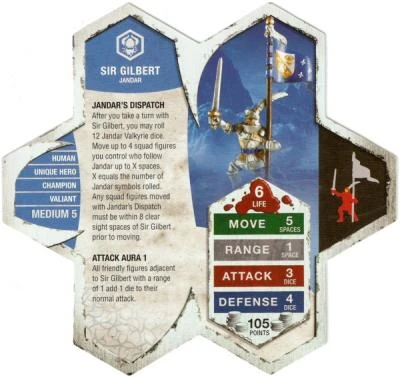
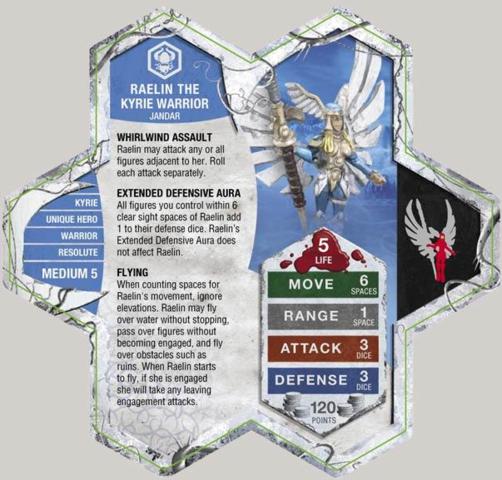
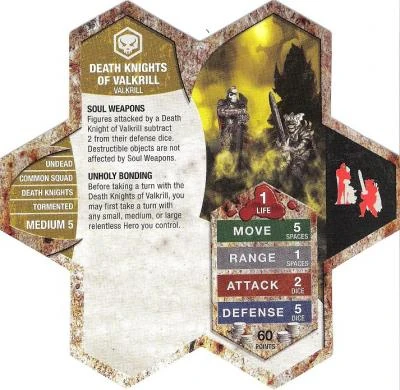
And here’s the pitched battle betwixt the demon horde that my eldest brought to bear (complete with custom demonlord that they’re testing out) and the righteous warriors that the Smaller Animal and I put together to combat it.  The demons have taken out most of us, but you can see one remaining templar cavalryman and his knight leader Sir Gilbert (from my middle child’s army) right in the demonlord’s face, while the only two guys I have left are that awesome angel Raelin at the top of the hill, providing her divine blessings from a safe distance, and you can just make out the back of Van Nessing, the monster hunter, helping the rest of the templars take on those death knights and mezzodemons.

It was a pretty epic battle, and it still ain’t over yet, but I think the forces of good, though having incurred serious losses, will eventually carry the day.  That giant-ass demon guy is down to one life left.


Anyways, that’s all for now.  More exciting stuff next week.  Probably.


Sunday, July 21, 2019

D&D and Me: Part 3 (Playing the Roles)


[This is the third post in a new series.  You may want to begin at the beginning.  Like all my series, it is not necessarily contiguous—that is, I don’t guarantee that the next post in the series will be next week.  Just that I will eventually finish it, someday.  Unless I get hit by a bus.]

[When we left off last time, I had sort of kind of played D&D, but not really knowing what the hell I was doing.  Still, many characteristics of those early games still hold true today (or perhaps are true again): I was the GM, I homebrewed a lot of stuff, I made sure my PC didn’t die, and I played a GMPC.]


To understand my D&D experience in college, we first have to understand a bit about my overall college experience.  I went to college right out of high school, as many folks do nowadays, but back then I was the first person in my family to do so.1  I went somewhat aimlessly for two years: I did well in a bunch of classes, did horribly in others, and dropped more than a few.  After two years, I had neither a major nor enough credits to technically qualify as a junior.  I decided that college was too hard and dropped out to go work in the Real World™.  Well, after 3 years of that, I decided that working in the Real World was even harder (most of my readers no doubt just said “duh” under their breaths) so I decided to go back to get my degree.  Long story short, I ended up spending my last 3 years of college about 3 years older than everyone else.  Being in most cases the only person around old enough to buy beer certainly has its uses in terms of popularity, and I found myself with a much larger friend pool in this second college stint.

I was also attending college with one of my best friends from late high school and the period just afterwards.  He was 4 years younger than I, not even a freshman when I was a senior, but his mom had been my Spanish teacher, so I’d known him forever.  And he was always much more gregarious than I was, so I inherited this large group of people who were predisposed to think kindly of me because we had this great friend in common.  And, at some point, my friend says to me, “hey, you used to play that Dungeons & Dragons thing, right?” D&D was never his thing, but some of those other folks were into it, so maybe I could hook up with them?  I was a bit hesitant, because remember: I still didn’t really have a clue what I was doing when it came to playing the game.  But at least I had played before, and that counted for something, and soon I was inducted into my first real gaming group.

I first joined that group in about 1990, and played in it very regularly until I moved to Maryland in 2004.  (And my very last game with the group was on the occasion of my going away party when I moved to California in 2007.)  Of course, people came and went continuously throughout that 14 years, and, much like the paradox of Theseus’ ship, it could be argued that it wasn’t really the same group at all by the time we got to the end of that period, with only 2 of us original members remaining.2  By the time it was over, we had not only played every version of D&D up to that point (1e, 2e, 2e + Skills and Powers, 3e, and 3.5e), but dozens of other games besides: Vampire, Call of Cthulhu, Star Wars (two different versions), Traveller, GURPS, Wheel of Time, Mage, Trinity, and In Nomine.  We further rolled up characters for but never played (or only played an introductory session of) Shadowrun, Hero, and BESM.  Games which I bought but never played included Palladium, 7th Sea, Earthdawn, EverQuest, and Jorune.  I don’t reel off this long list to impress you, but rather to impress on you what a huge part of my life this was.  It didn’t consume all my spare time, of course—there were videogames, and books, and TV and movies, and beaches and skiing, and a little bit of dancing and a lot of drinking—but I doubt there was a single month in that 10-to-14-year period when I didn’t play at least once, and, outside of Novemeber and December when the holidays would invariably bork our schedules, not even that many weeks where we didn’t play.

At first, it was all one insane, connected campaign.  If we got bored with one setting or plotline, we just planehopped somewhere else: from Ravenloft to Athas to Sigil, from White Plume Mountain to Castle Amber to a strange land laid out like a chessboard.  Some of us would keep the same characters, some of us would roll up new ones, and I have a lot of difficulty remembering which characters adventured with which and where one adventure ended and the next began.  I remember we decided to play an “evil campaign” once and, instead of rolling up new characters, we just turned all our old characters evil.  It had rather dire consequences for the ranger and the cleric, but I was a druid at the time (and therefore true neutral, whether I liked it or not), so I just sort of shrugged and said “whatever.”3  Occasionally our characters would die, but more often we’d just get bored with them and “retire” them ... you know, just in case we ever needed them again.4  Later, we adopted a rotation system, where we would take turns being the GM so that each person had more time to prepare for their campaign, and we would play a different game—often a whole different game system—every week.  Thus, even when we were playing Vampire or Star Wars or Call of Cthulhu, we were still playing D&D concurrently.

My history as a player was both weird and predictable.  Just like with comic book characters, I liked the oddballs.  Fighters were boring: all they could really do (at least pre-third-edition) was swing their swords and repeat.  Wizards were both diametrically opposed and exactly the same: they had this huge plethora of spells (which came with a massive amount of bookkeeping work), but, at the end of the day, all they could really do was cast their spells and repeat.  I was drawn to the classes that nobody else wanted to play because they were strange or “underpowered,” classes that couldn’t do any one thing better than anyone else but could do a little bit of everything.  I favored druids and bards,5 once a nature cleric (who was almost a druid, really), and later on a psionicist and then a monk (who also had a few psionic levels).  I also experimented with hybrid characters, using the Skills & Powers system, trying to create the perfect blend of thief and wizard.  The two times I was reluctantly talked into playing a straight fighter, I chose a half-ogre the first time and an alaghi (pseudo-yeti) the second time.  For yet another evil campaign, I played a wannabe necromancer who was so low-level that he could only reanimate zombie chickens.6  Basically, any excuse to do something different.

Again, it’s an interesting exercise to analyze my behavior in hindsight.  Could I say I was embracing diversity, even back so far as when I was trying to “collect” all the monsters and let them all have an equal place in my fantasy world?  Well, somewhat ... but I don’t want to hyperidealize my younger self.  Absolutely I was always happy to go around slaughtering orcs and goblins just because that’s what you were “supposed” to do in the game, and I will admit it never really occurred to me to question that until I started hearing about other people doing it first.  So please don’t imagine that I’m claiming more social consciousness than I deserve.  But I do want to give credit to D&D for a little of that type of thing.  For instance, the first time I ever imagined myself as a woman was because I wanted to play a swanmay, and there are no male swanmays.  At that time, I wasn’t yet comfortable enough in my identity and sexuality that this was a no-brainer for me: I struggled with that decision for quite a while before I took the plunge.  And I no doubt didn’t do a very good job portraying a woman—just putting on someone else’s shoes doesn’t automatically make you understand their journey.  But it’s a start, and, as they say, every journey starts with a single step.  Since that first female character (Ellspeth, my nature priest), I’ve played straight women on at least two other occasions, and once a shapeshifter character who was very gender fluid.7  And while I might not be ready to give roleplaying credit for broadening anyone’s horizons to the point of epiphany, I can certainly say that it helped me avoid the trap of having all my imagined characters default to white / male / cis / etc—in other words, exactly like me.  And that’s definitely a good thing.


Next time: I’ll take a little closer look at what playing all these different roles meant to me.


__________

1 Except for possibly my grandfather on my mother’s side, who was the only other person before me to even attend.  But I think even then there was some delay between high school graduation and college matriculation.

2 Actually, technically speaking, I wasn’t an original member myself, so there was really only one.

3 What I actually said had more to do with maintaining balance in the universe and how we’d probably done enough good in the world that we could afford to do a little evil for a while without tipping the scales too much.  But it certainly meant “whatever.”

4 My absolute favorite was my friend Tim’s dwarf (fighter? cleric?), who took his helm of underwater breathing (or somesuch; I’m probably misremembering the exact name of the item) and retired to the ocean floor to become a kelp farmer.

5 Prior to second edtion, bards were notoriously impossible to play; my first bard character was drawn from the Dragon magazine article “Singing a new tune: A different bard, not quite so hard”.

6 I mean, theoretically, he would have been able to raise proper zombies at some point.  But we didn’t stick with that campaign very long.

7 That would be in the Trinity game.  For some reason, I was very attracted to the biokinetics in the game, who could change their body shapes and facial features pretty much at will, and I decided I was actually 3 or 4 different people living in one body, with different races and genders.


Sunday, July 14, 2019

SoCal 'Scapers Summer Gameday, 2019


This weekend we had a Heroscape gameday.  Now, you probably remember that every year we do a Heroscape tournament, and this year will no doubt be no exception.  But, at the end of the tourney, when we’re saying our farewells, we always promise that we’ll get together more than once a year, and maybe have just a casual gameday or two some other time during the year.  We always say that ... but we (almost) never do.  In fact, I would say that, in the decade or so that I’ve been going to SoCal Heroscape tournaments, we’ve managed to get together for a non-tourney event about twice.  We just suck at getting organized.

But we finally managed it, yesterday at a local game store called Paper Hero’s Games.  I and all three of my children, plus the middle one’s best friend, made the (moderately short) trek down and met up with 2 other regular tourney-goers, and we just happened to run into a new person who used to play but hadn’t in a long time.  Brave soul that he was, he came up to us and asked if he could join, so we set him up with an army (I have a tendency to overdo when it comes to bringing ready-to-play armies, so I had 25 or so) and threw him into the mix.  It was a great time, and I personally loved the venue more than other places we’ve tried, although I do admit that it was a tad crowded.  Squeezing into your seat was tricky, and finding a place to put all our stuff was a logistical puzzle, and it certainly was loud.  But the tables were free, the store management was friendly, they didn’t care that we brought outside food and drinks, didn’t give me crap when I finally ditched my shoes, and even asked if it was okay if they took back the table we had unceremoniously absconded with to put our overflow crap on—he asked us if it was okay to use his table that we weren’t even supposed to be using!  I was super-impressed with the friendly staff and hope to go back sometime.

The games were good too.  We only got in about 3 games a piece, but it was a lot of fun, and I think the kids had a good time.  We bought some stuff we really didn’t need (more to support the store than anything else), palled around with our fellow ‘Scapers, and one of our oldest Heroscape friends agreed to trade me a beautifully painted Gothlok for an unpainted one and few bucks.  I wish I’d had a chance to try out even more of my weird army ideas, but my littlest one and I did get to play a bizarre army consisting of Harley Quinn (because that’s her favorite comic book character), Scarecrow and Creeper (who, with their insane personalities, bond with Harley), a passel of Nottingham Brigands for range, and good ol’ Marcu Esenwein to fill out the last 20 points.  (This army, by the way, is not a particularly good one, but it was super-fun to play.)  All in all, a great time, and I hope we get to do it more often.

Next week, something more substantial.